Source Multi Person Management Lockout Hasp for Industrial, Commercial, Household
Find and compare 30 multi person management lockout hasp options designed for industrial safety applications. Buyers can evaluate models with varying padlock capacities, materials like plastic and aluminum alloy, and customization services for group lockout needs.
Key considerations
Products List




Comprehensive Sourcing Guide
Strategic Sourcing Guide for Multi-Person Management Lockout Hasps
Understanding the Core Product Architecture and Technical Specifications
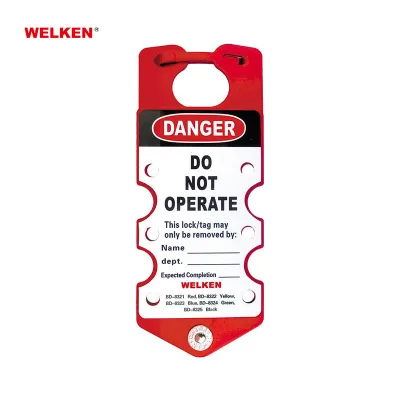
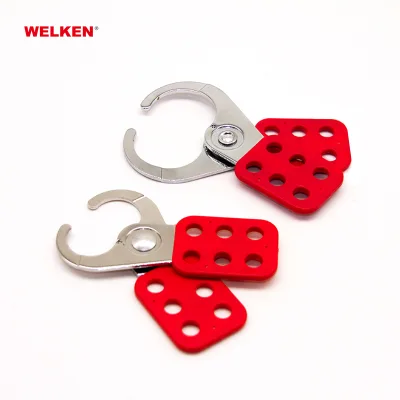
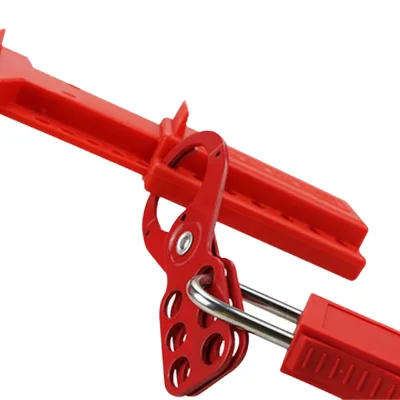
When sourcing multi-person management lockout hasps, buyers must first distinguish between the specific mechanical configurations available in the current market. The core product, often identified as a Hasp Lockout, is engineered to facilitate the isolation of energy sources by allowing multiple personnel to apply their personal padlocks simultaneously. This ensures that equipment cannot be re-energized until every individual involved in the maintenance or repair process has removed their lock.
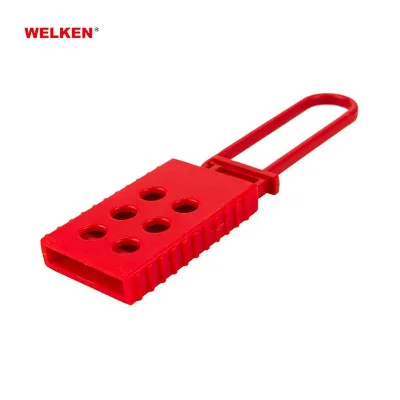
Based on current product observations, the structural integrity of these devices varies significantly by model. A primary configuration utilizes a magnetic structure, which is particularly noted for its ability to prevent deformation and fading, ensuring long-term visibility and reliability in industrial environments. The material composition is a critical differentiator; while some units are constructed from durable plastic, others utilize aluminum alloy to meet higher stress requirements. The plastic variants are often highlighted for their resistance to corrosion and suitability for a wide range of industrial safety applications, whereas aluminum alloy models may offer enhanced mechanical strength for heavy-duty scenarios.
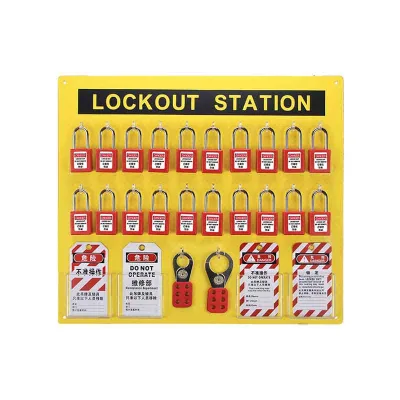
The physical dimensions and hole sizes are paramount for compatibility with standard padlocks. The observed market data indicates specific lock hole sizes ranging from 8mm to 10.5mm, with some models featuring a 9mm aperture. This variance necessitates that procurement teams verify the compatibility of their existing padlock inventory before placing orders. For instance, a model with a 10.5mm jaw size and a specific lock hole dimension may be required for thicker shackle padlocks, while an 8mm hole size might suffice for standard safety locks. Furthermore, the structural design includes specific hole counts; certain high-capacity models are designed with six holes to accommodate a larger number of workers, while others are optimized for specific group sizes, such as allowing up to eight or even twenty-four padlocks depending on the model designation.
The packaging and logistical specifications also play a role in the initial procurement decision. Units are typically supplied in boxes or cartons, with bulk packaging options available for large-scale deployments. For example, some cartons are designed to hold up to 720 pieces, which is essential for facilities managing large-scale safety programs. The single gross weight of these units is generally low, ranging from 0.030kg to 0.150kg, which simplifies shipping calculations and inventory handling. However, the overall carton dimensions can vary significantly, with some standard packages measuring approximately 39x34x39.5cm, while others may be larger to accommodate bulk orders or specific regional shipping requirements.
Compliance, Certification, and Safety Standards Verification
In the realm of industrial safety, the absence of a specific certification label on a product listing does not negate the necessity for compliance. Buyers must approach the verification of safety standards with a rigorous, evidence-based mindset. The provided data indicates that products are designed for industrial environments and are suitable for combination electrical group lock usage. However, the specific international or national standards (such as ANSI, OSHA, or ISO) that these products meet are not explicitly defined in the general product attributes.
Consequently, the procurement strategy must include a direct inquiry to the supplier regarding the specific standards the product adheres to. While the product attributes mention a "Lifetime Guarantee" for workmanship and material, this is a commercial promise rather than a regulatory certification. Buyers should request documentation proving that the hasp has undergone testing for tensile strength, resistance to chemical exposure, and durability under repeated locking and unlocking cycles. The observation that the product features "No Deformation" and is "Safe and Reliable" is an attribute of the design, but it must be substantiated by third-party test reports or internal quality assurance data provided by the manufacturer.
Furthermore, the customization availability mentioned in the product data suggests that suppliers can alter colors or dimensions to meet specific site requirements. This flexibility is a significant advantage for facilities with color-coded safety programs, where red, yellow, and blue hasps are used to denote different types of hazards or departments. However, customization must not compromise the structural integrity or the locking mechanism's reliability. Buyers should verify that any custom color or material modification maintains the original safety ratings and does not introduce new failure points. The origin of the product, noted as Zhejiang, China, is a common manufacturing hub for these items, but the location itself does not guarantee compliance. The buyer's responsibility is to ensure that the specific batch ordered meets the safety regulations of the destination country, regardless of the manufacturing location.
Cost Drivers and Economic Factors in Procurement
The pricing structure for multi-person management lockout hasps is influenced by several key variables, including material composition, customization requirements, and order volume. The observed price range in the market spans from $0.10 to $50.69 USD. This wide disparity is not arbitrary; it reflects the differences in material quality, manufacturing complexity, and the specific features of the model. For instance, a basic plastic hasp with a standard hole size will likely fall at the lower end of this spectrum, while an aluminum alloy model with a high padlock capacity and custom branding will command a higher price point.
The Minimum Order Quantity (MOQ) is another critical economic factor. The data shows an MOQ range from 1 to 1000 units. This flexibility allows small workshops to purchase single items for immediate use, while large industrial facilities can leverage bulk purchasing to reduce the unit cost. The "Selling Units" are typically listed as single items, but the packaging often implies bulk availability, such as cartons containing 720 pieces. Understanding the MOQ is essential for budgeting; ordering below the MOQ may result in a significantly higher per-unit cost or require the buyer to pay for a full carton of inventory they do not immediately need.
Customization is a primary driver of cost escalation. While the product attributes confirm that customization is available, this service typically incurs additional fees for tooling, mold creation, or special packaging. If a facility requires specific colors like red, yellow, or blue to match their safety protocols, or if they need specific dimensions to fit unique machinery, these requests will increase the final price. Additionally, the "OEM Support" mentioned in the data indicates that suppliers can produce products with the buyer's branding, which is a valuable service for large corporations but comes with a premium.
Buyers should also consider the total cost of ownership, which includes shipping, handling, and potential inventory holding costs. The single gross weight of the units is low, but the carton dimensions can be substantial. For example, a carton measuring 580x630x95mm will occupy significant space in a shipping container, potentially affecting freight costs. Therefore, optimizing the order quantity to balance the MOQ with storage capacity is a crucial financial strategy. The "Lifetime Guarantee" for workmanship and material can also be viewed as a cost-saving measure, reducing the frequency of replacement purchases over time, provided the initial quality is high.
Typical Applications and Operational Use Cases
The primary application of multi-person management lockout hasps is in industrial safety scenarios where the isolation of energy sources is critical. These devices are specifically designed for environments where multiple personnel are working on the same piece of equipment, such as in manufacturing plants, power generation facilities, and chemical processing units. The "Multi-Person Management" feature ensures that no single individual can re-energize the system until all team members have completed their tasks and removed their locks, thereby preventing accidental startup and potential injury.
The versatility of these hasps allows them to be used in various settings, including household, commercial, and industrial applications. However, the "Designed for Industrial Environments" attribute suggests that their primary utility is in high-risk sectors. For example, in electrical maintenance, the hasp is used for "Combination Electrical Group Lock Usage," ensuring that all technicians working on a circuit have secured their personal lock. The "Durable" and "Easy Installation" features make these devices suitable for frequent use in demanding conditions where equipment is subjected to vibration, dust, and moisture.
The color coding of the hasps, available in red, yellow, and blue, plays a vital role in operational efficiency. Facilities often use color to differentiate between different types of hazards or departments. For instance, red might be used for electrical lockouts, yellow for mechanical, and blue for pneumatic systems. The ability to customize colors allows companies to align their safety protocols with their existing visual management systems. The "No Fading" attribute is particularly important for outdoor or high-UV environments, ensuring that the color coding remains legible over time.
In addition to electrical lockouts, these devices are suitable for a wide range of usage scenarios, including valve isolation, machinery guarding, and equipment maintenance. The "Widely Usage" attribute indicates that the design is adaptable to various machinery types. The specific model selection depends on the number of workers involved and the physical constraints of the equipment. For example, a model with a 24-padlock capacity is ideal for large-scale projects involving entire teams, while a model with 8 holes is sufficient for smaller groups. The "Magnetic Structure" in some models may offer an advantage in environments where quick release is necessary, although the primary locking mechanism remains mechanical to ensure security.
Supplier Evaluation and Selection Criteria
Selecting the right supplier for multi-person management lockout hasps requires a thorough evaluation of their capabilities, reliability, and adherence to quality standards. The first step is to verify the supplier's origin and manufacturing capacity. The data indicates that products originate from Zhejiang, China, a region known for its manufacturing expertise. However, buyers should not rely solely on the region; they must assess the specific factory's production lines, quality control processes, and capacity to meet demand.
The availability of "OEM Support" and "Customization" are strong indicators of a supplier's flexibility and willingness to collaborate. A supplier that offers these services is likely more experienced in handling diverse client needs and can adapt to specific requirements. Buyers should request samples to evaluate the build quality, material finish, and the precision of the lock holes. The observation that some models have a "Lifetime Guarantee" for workmanship and material suggests that the supplier is confident in their product quality, but this guarantee should be reviewed in detail to understand its scope and limitations.
Communication and responsiveness are also critical factors. A reliable supplier should be able to provide clear information about product specifications, lead times, and shipping terms. The "Service" attribute implies that the supplier offers customer support, which is essential for resolving any issues that may arise during the procurement process. Buyers should also check the supplier's track record for on-time delivery and their ability to handle large orders, especially given the MOQ range of 1 to 1000 units.
Finally, buyers should consider the supplier's commitment to continuous improvement and innovation. The presence of various models with different features, such as "No Deformation" and "Safe and Reliable" designs, indicates a focus on product development. A supplier that invests in research and development is more likely to provide high-quality products that meet evolving safety standards. By evaluating these factors, buyers can identify suppliers that are not only capable of delivering the required products but also partners who can contribute to their long-term safety and operational success.
Quality Control and Long-Term Procurement Considerations
Ensuring the quality of multi-person management lockout hasps is paramount to maintaining a safe working environment. The "Advantage" of "No Deformation" and "No Fading" suggests that the products are designed to withstand harsh conditions, but buyers must implement a robust quality control process to verify these claims. This includes inspecting the material composition, checking the dimensions of the lock holes, and testing the locking mechanism for durability. The "Single Gross Weight" and "Product Standard" dimensions provided in the data serve as baseline metrics for quality verification; any deviation from these specifications should be flagged for further investigation.
Long-term procurement considerations involve building a sustainable supply chain that ensures consistent availability of high-quality safety equipment. The "Lifetime Guarantee" for workmanship and material is a significant factor in this regard, as it reduces the risk of premature failure and the need for frequent replacements. However, buyers should also consider the potential for product obsolescence and the availability of spare parts. A supplier that offers a wide range of models and customization options is better positioned to support long-term needs.
Additionally, the "Customization" feature allows for the adaptation of products to changing safety protocols or equipment configurations. This flexibility is essential for facilities that undergo regular modifications or expansions. Buyers should establish a relationship with a supplier that can accommodate these changes without compromising quality or delivery times. The "OEM Support" also plays a role in long-term procurement, as it allows companies to maintain brand consistency and ensure that all safety equipment meets their specific standards.
Finally, buyers should monitor market trends and technological advancements in lockout/tagout equipment. The industry is constantly evolving, with new materials and designs emerging to improve safety and efficiency. By staying informed and maintaining a proactive approach to procurement, buyers can ensure that their facilities remain compliant with the latest safety regulations and benefit from the best available technology. The "Multi-Person Management" aspect of these hasps is a critical component of safety culture, and investing in high-quality, reliable products is essential for protecting workers and maintaining operational continuity.
FAQs
What is the primary usage of multi person management lockout hasps?
These devices are primarily designed for industrial environments to ensure safety during maintenance. They support household, commercial, and industrial applications by allowing multiple personnel to lock out energy sources simultaneously. This prevents accidental re-energization until all workers have removed their individual locks.
Which lock hole sizes are available for these hasp models?
Available lock hole sizes include 8mm, 9mm, and 10.5mm depending on the specific model. Buyers must verify compatibility with their existing padlocks as the aperture size varies. Some models also feature a jaw size of 38mm to accommodate different shackle thicknesses.
Can these hasps be customized for specific safety color codes?
Yes, customization is available for colors such as red, yellow, and blue to match safety protocols. Suppliers also offer OEM support for branding and specific dimensions. Customization allows facilities to align the hasps with their existing visual management systems without compromising structural integrity.
How many padlocks can different models of these hasps hold?
Capacity varies by model, with options allowing for 8, 24, or more padlocks. Some high-capacity designs feature six holes to accommodate larger teams. Selecting the correct model depends on the number of workers involved in the specific maintenance task.
What materials are used to construct these multi-person lockout hasps?
Materials include durable plastic and aluminum alloy to meet different stress requirements. Plastic variants offer corrosion resistance, while aluminum models provide enhanced mechanical strength. Both materials are engineered to prevent deformation and fading in industrial environments.
What is the typical packaging and weight for these safety devices?
Units are packed in boxes or cartons, with bulk options containing up to 720 pieces. The single gross weight ranges from 0.030kg to 0.150kg per unit. Carton dimensions vary, with some standard packages measuring approximately 39x34x39.5cm for efficient shipping.
Where are these lockout hasps manufactured and what is the origin?
These products originate from Zhejiang, China, a major manufacturing hub for industrial safety equipment. While the location is noted, buyers must verify specific batch compliance with destination country regulations. The origin does not guarantee certification but indicates a common production region.